

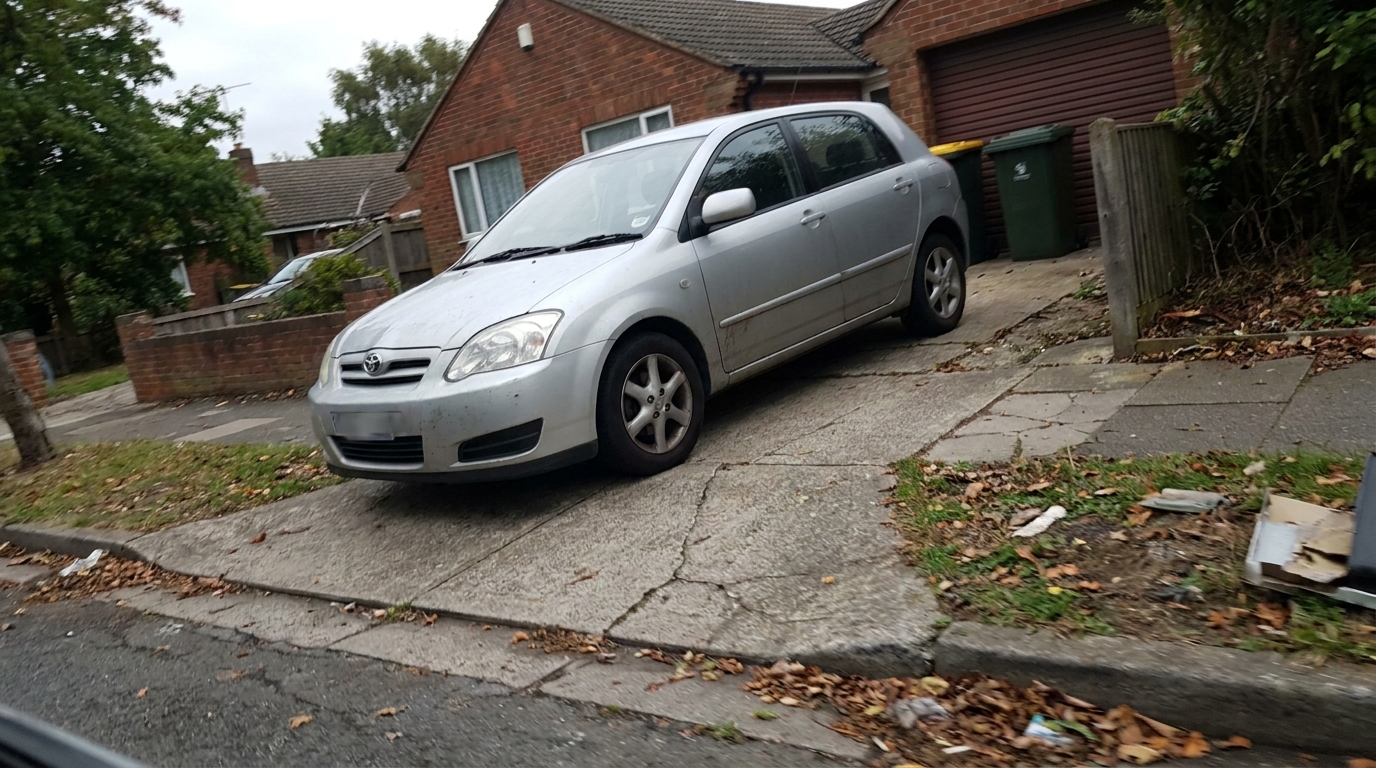
When someone scrolling through listings sees a car photo cropped tight on just the bonnet and windscreen, their first thought isn't "nice paint." It's "what are they not showing me?"
This reaction is almost universal. Buyers have been burned before, or at least they've heard the stories. A zoomed-in shot of a gleaming door panel might be hiding a crumpled rear quarter. A close-up of the interior might be avoiding a smashed taillight. Whether you're genuinely just bad at photography or actively concealing damage, the result is the same: suspicion.
The good news is that framing your car photos properly isn't complicated. You don't need expensive equipment or professional training. You just need to understand what buyers actually want to see, and why their brains are wired to distrust anything that feels cropped or incomplete.
What Tight Crops Signal to Buyers
Human brains are pattern-recognition machines, and online shoppers have developed a particular pattern: incomplete information usually means bad information. This isn't paranoia; it's experience.
When a listing shows only fragments of a car, a wheel arch here, a dashboard there, buyers mentally fill in the gaps with worst-case scenarios. That missing rear bumper shot? Probably damaged. The absent driver's side view? Likely scratched or dented. Even if your car is in perfect condition, selective framing triggers the same skepticism as a listing that's genuinely hiding problems.
There's also a social element at play. Serious sellers, dealers, experienced private sellers, anyone who actually wants to move a car quickly, tend to show the whole vehicle. When your listing looks different from theirs, you're signalling inexperience at best and dishonesty at worst. Neither helps you sell.
The Minimum Context Buyers Want to See
Before a buyer will even consider clicking through to read your description, they want to answer one question: what does this car actually look like?
That means showing the full vehicle from multiple angles. At minimum, most buyers expect:
- A front three-quarter shot that shows the grille, headlights, and one full side
- A rear three-quarter shot covering the other side and the back end
- A direct side profile showing the car's proportions and stance
- A full interior shot of the front cabin
These four images give buyers enough information to form a complete mental picture. They can see the overall condition, spot any obvious issues, and decide whether to investigate further. Skip any of these, and you're asking people to trust you without giving them a reason to.
Notice that none of these are close-ups. The primary photos in your listing should be wide enough to show the car in context, sitting in a real space, with all four corners visible. Detail shots come later, and they serve a different purpose.
When Close-Ups Help vs When They Hurt
Close-up photos aren't inherently suspicious. They become suspicious when they're the only thing you're showing, or when they replace the wide context shots that buyers expect.
Used correctly, close-ups actually build trust. A tight shot of clean brake rotors, a clear photo of the service stickers in the engine bay, a detailed image of the stitching on leather seats, these tell buyers you're confident enough to invite scrutiny. You're not hiding from the details; you're highlighting them.
The key is sequence. Wide shots come first. They establish that the car exists, that it's complete, that there are no nasty surprises lurking just outside the frame. Once buyers have that foundation, detail shots add value instead of raising questions.
If your car does have some damage, hail dents, a parking scrape, worn upholstery, the same principle applies. Show the full car first, then include honest close-ups of the imperfections. This approach actually works in your favour: buyers respect transparency, and a clear photo of a small dent is far less alarming than a suspicious gap where that panel should appear.
How to Show Detail Without Looking Evasive
The trick is making your close-ups feel additive rather than substitutive. You're not replacing the full-car shots; you're supplementing them.
A practical rule: for every close-up in your listing, make sure there's a wider shot that shows the same area in context. If you're including a detailed photo of the alloy wheels, there should also be a side profile that shows all four wheels in place. If you're highlighting the touchscreen infotainment, the interior should also appear in a full-cabin shot.
This redundancy might feel excessive, but it serves a purpose. Buyers can verify that your detail shots actually match the car. They can see that the nice wheel in the close-up is indeed attached to the vehicle in the wide shot. This cross-referencing happens subconsciously, and it's a major factor in whether people trust your listing enough to make contact.
Another technique: include reference points in your close-ups. A hand holding a cloth while wiping down a surface, a pen pointing at a feature you're describing, even just the car's badge visible in the corner of a detail shot, these small touches anchor the image to reality and make it harder to dismiss as deceptive.
Practical Framing for Driveways and Tight Spaces
Not everyone has access to a spacious car park or scenic lookout. Most private sellers are working with a suburban driveway, a narrow garage, or a cramped apartment parking space. Getting proper framing in these conditions takes a bit of creativity.
First, move the car. Even a few metres can make a difference. Roll it to the end of the driveway, pull it onto the street (briefly), or reposition it so you're not shooting directly into a fence or wall. The goal is to put distance between yourself and the car so you can step back far enough to fit everything in frame.
Second, use your phone's wide-angle lens if it has one. Most modern smartphones include an ultrawide option that can capture a full car even in confined spaces. Just be aware of distortion, ultrawide lenses can make wheels look stretched and proportions seem off if you're too close. Step back as far as you can, then use the wide lens to fit the rest.
Third, work in the corners of your space. Shooting from a corner lets you use the diagonal, which is longer than shooting straight down a wall. If your driveway is three metres wide, shooting diagonally might give you four or five metres of depth to work with.
Finally, consider what you can remove from the frame. Bins, toys, garden hoses, other vehicles, anything that isn't the car is a distraction. Clearing the area for five minutes of shooting is much easier than trying to explain away a cluttered background later.
If you're stuck in genuinely impossible conditions, a cramped underground car park, a garage that barely fits the car, consider tools like Cardabra that can replace messy backgrounds with clean, neutral alternatives. The car stays exactly as it is, imperfections and all, but the environment stops competing for attention.
Getting the Frame Right Matters More Than You Think
Buyers make decisions fast. In the few seconds it takes to scroll past your listing, they're absorbing signals about whether you're trustworthy, and your photo framing is one of the loudest signals of all.
Show the whole car. Give context before detail. Don't make people wonder what you're hiding, because they'll assume the worst. These aren't advanced photography techniques; they're just basic respect for the person on the other side of the screen.
If you're putting effort into selling your car, put effort into showing all of it. The buyers who actually convert, the ones ready to pay fair money without endless haggling, are the ones who feel confident they know what they're getting. Your framing is where that confidence starts.
If you want the shooting side covered as well, How to Photograph a Car for Sale With Just Your Phone walks through angles, timing and distance, and 5 Phone Photography Mistakes That Kill Your Car Listing covers the habits that undo good framing.
Turn your phone snaps into showroom-grade listings.
Upload a photo, pick a background, and Cardabra returns a polished listing image in about 30 seconds.