

Most sellers take photos to show what they like about the car. Buyers look at photos to remove risk. If your listing leaves basic questions unanswered, expect messages asking for more angles, tyre shots, odometer readings, service history, and close-ups of marks.
Good photos to sell car online are not about making a tired car look new. They are about proving condition, spec, and ownership details before someone spends time organising an inspection. The better your photos, the more serious your enquiries tend to be.
Think of your photo set as the first inspection. A buyer wants to understand the car quickly, spot anything that needs a follow-up question, and decide whether the price makes sense. Your job is to make that decision easy.
The first photo that earns a click
The first image has one job: help the right buyer recognise the car and want to open the listing.
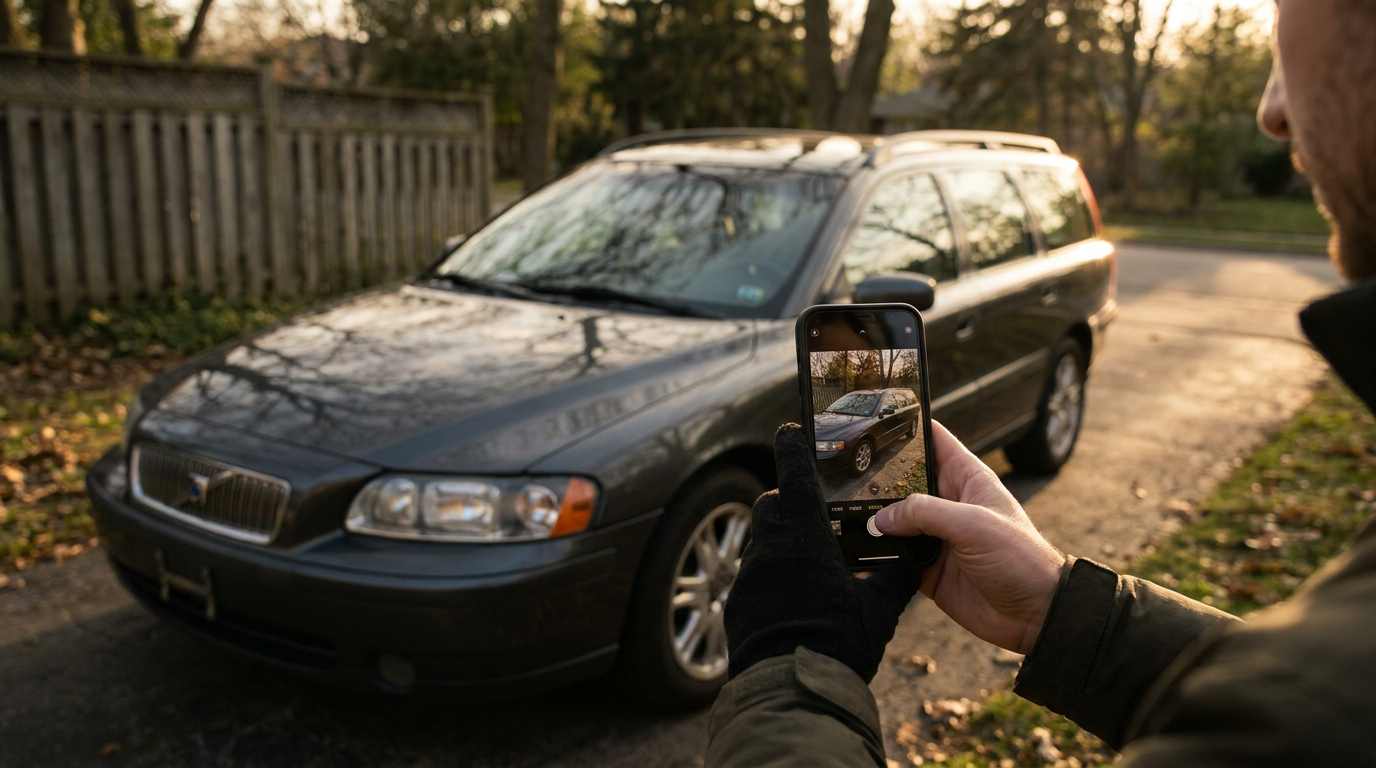
Use a clean front three-quarter angle, taken from around headlight height, with the whole car in frame. This angle shows the front, one side, the wheels, the colour, and the stance in one shot. It is the closest thing to how a buyer first sees a car in person.
Avoid making the lead photo too clever. A close-up of a badge, a dramatic low angle, or a cropped shot of the headlight might look stylish, but it does not help someone compare listings. Buyers scrolling Facebook Marketplace, Carsales, or Autotrader are making quick decisions. They want to know the model, body shape, colour, and general condition immediately.
The background matters because clutter competes with the car. A busy driveway, bins, other cars, strong shadows, and wet patches can make even a good vehicle look careless. You do not need a studio. You do need a clear, well-lit space.
If your background is messy, AI can help by removing distractions and presenting the car in a cleaner setting. That is what Cardabra is built for. It can tidy the scene and heavily blur licence plates, but it should never be used to remove dents, scratches, missing trim, bald tyres, or any other real condition issue.
Exterior angles buyers expect
A buyer looking at used car photos is checking more than paint colour. They are looking for signs of accident repair, poor maintenance, mismatched panels, rough ownership, or hidden problems.
At minimum, include these exterior car listing photos:
- Front three-quarter view
- Rear three-quarter view
- Straight front view
- Straight rear view
- Full driver side
- Full passenger side
- Each wheel, especially if the rims are marked
- Close-ups of any dents, scratches, fading, rust, hail marks, or cracked plastic
Both sides matter. A seller who only shows one side of the car creates doubt, even if there is nothing wrong with the other side. Buyers know that damage is often hidden by omission, not by lying.
Take exterior photos in even daylight where possible. Harsh midday sun can blow out white paint and hide marks in deep shadows. Night photos, underground car parks, and rainy shots make condition harder to judge. Wet paint can look better than it is, so dry photos are usually more trustworthy.
Do not over-edit. Increasing contrast, saturation, or sharpness too much can make the listing feel suspicious. The car should look clean and well presented, not digitally polished beyond reality.
Interior photos that answer real questions
Interior photos are where buyers decide whether the car has been respected. They are not just checking the seats. They are checking wear, cleanliness, features, space, and whether the listing description matches the actual car.
Useful interior photos include:
- Driver seat and steering wheel
- Front passenger seat
- Rear seats
- Dashboard and centre console
- Infotainment screen and climate controls
- Gear selector and handbrake area
- Door trims, especially on older cars
- Boot or cargo area
- Child-seat anchor points if relevant
- Any factory options or accessories that are actually included
The driver seat, steering wheel, pedals, and gear selector tell a buyer a lot about wear. A low-kilometre car with a heavily worn steering wheel raises questions. A higher-kilometre car with clean, honest wear can still be appealing if the price is right.
Show the interior as it will be sold. Remove rubbish, loose receipts, tools, old water bottles, and personal items. Vacuum the carpets. Wipe dust from screens and glossy trim. But do not try to hide torn leather, sagging headlining, broken vents, missing buttons, or stains. Photograph them clearly if they are noticeable.
If the car has selling points such as seven seats, a panoramic roof, Apple CarPlay, a towbar control, heated seats, or a factory upgraded audio system, include them. Buyers often filter mentally by features, even when the platform filters are limited or inaccurate.
Damage, tyres, odometer, and paperwork shots
This is the section many sellers skip, and it is usually where the back-and-forth begins.
A serious buyer wants to know what they are walking into. If there is a scrape on the bumper, show it. If one wheel has gutter rash, show it. If the tyres are near the wear bars, show them. That does not kill a sale. It helps set expectations and reduces awkward inspection conversations.
For damage, take two photos: one close-up and one wider shot showing where it sits on the car. A tight close-up of a scratch without context can make it look worse or better than it is. The wider photo helps the buyer judge scale.
Tyre photos are useful because tyres are a real cost after purchase. Show tread condition, sidewalls if there is cracking or damage, and the wheel face. If the tyres are a recognised brand or recently replaced, photograph the tyre clearly enough that the buyer can see what is fitted. If the car has mismatched tyres, do not hide it.
The odometer photo is essential. Take it with the ignition on, in focus, and with the kilometre reading visible. If warning lights remain after start-up, do not crop them out. Some warning lights are normal before the engine is running; persistent ones need to be disclosed and explained.
Paperwork can also reduce questions. Consider showing service books, recent invoices, registration status, roadworthy certificate where applicable, spare keys, and owner manuals. Cover personal information such as your address, phone number, licence number, VIN if you prefer, and payment details. Buyers need confidence, not your private data.
Licence plates are a privacy choice. Many sellers blur them online. If you use Cardabra, plates are heavily blurred by default. Just remember that blurring a plate is different from hiding condition. Privacy is fine. Misrepresentation is not.
Photo order for a smoother enquiry
The order of your sell car online photos should follow the way a buyer thinks. Do not make them hunt through random images to build a picture of the vehicle.
A practical order is:
- Best front three-quarter exterior photo
- Rear three-quarter exterior photo
- Front, rear, and both side profiles
- Wheels and tyres
- Known marks, dents, scratches, or rust
- Driver area and dashboard
- Front and rear seats
- Infotainment, controls, and key features
- Boot, cargo area, or tray
- Odometer and instrument cluster
- Engine bay, if clean and relevant
- Service books, invoices, certificates, manuals, and keys
For most private listings, 15 to 25 useful images is better than 50 repetitive ones. More photos are helpful only if they answer new questions. Five near-identical exterior angles do less than one honest close-up of a scuffed bumper.
The listing description should match the photo order. If you mention new tyres, show them. If you mention a full service history, show the stamped book or invoices with private details covered. If you mention a small dent, include the dent photo rather than waiting for a buyer to ask.
This is also where small dealers can stand out. Consistent car listing photos across stock make comparison easier and reduce low-quality enquiries. Buyers notice when every vehicle is photographed clearly, in the same order, with the same level of honesty.
Make the photos do the first round of selling
What car buyers look for is simple: proof. They want proof of condition, proof of features, proof of kilometres, proof of care, and proof that the seller is not wasting their time.
The best used car photos are not the most glamorous. They are the ones that make a buyer feel informed enough to enquire, inspect, and negotiate seriously. Show the car cleanly. Show the whole vehicle. Show the flaws. Show the details that affect value.
If you want your phone snaps to look cleaner without changing the car itself, Cardabra can turn them into consistent, listing-ready images with distraction-free backgrounds and heavily blurred plates. Use it to present the car better, not to pretend the car is better.
That is the standard buyers respond to: clear, complete, and honest.
For the how of each shot, How to Photograph a Car for Sale With Just Your Phone covers timing, angles and light, and private sellers should blur the number plate before uploading.
Turn your phone snaps into showroom-grade listings.
Upload a photo, pick a background, and Cardabra returns a polished listing image in about 30 seconds.