

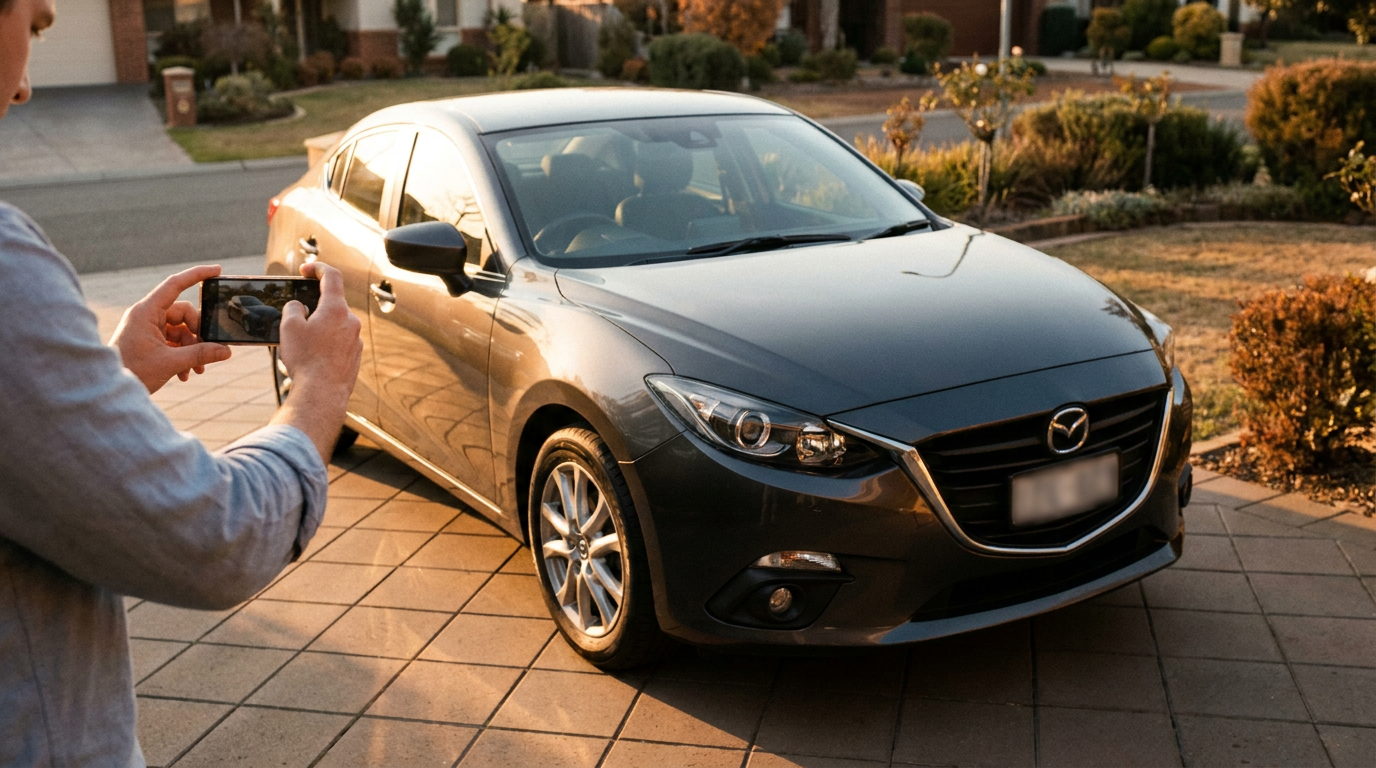
Yes. If you are a private seller in Australia, blur your number plate in your listing photos. It is a sensible privacy step, it is normal practice on Facebook Marketplace, Gumtree and Carsales, and done properly it does not make the car look dodgy. If you are a dealer, the calculation is different and leaving plates visible is often fine.
The rule underneath all of this is simple. Hide information that identifies you and does not help the buyer judge the car. Show everything that does help the buyer judge the car. The plate can go. The paint, tyres, panel gaps, dents, warning lights, odometer and interior wear stay exactly as they are.
Why sellers blur plates in Australia
Your rego plate is visible every time you drive to the shops, so it is easy to dismiss plate privacy as paranoia. Selling online is different because a listing packages things together that are otherwise hard to link: your name or Marketplace profile, the car, the plate, the suburb, the street behind the car and sometimes your house.
There are three practical reasons Australian private sellers blur plates.
Privacy is the first. A plate plus a driveway plus a suburb is enough for someone to work out where a car they want lives. Blurring the plate breaks that chain without hiding anything about the car.
Scam prevention is the second. Plate details and photos lifted from real listings are reused in fake ads on Marketplace and Gumtree, and cloned plates are a known problem in most states. Blurring removes one easy data point from a public page.
Control is the third. A genuine buyer will want the rego or VIN to run a PPSR check for finance owing or a written off history, and to confirm the exact variant. That is reasonable. It does not mean every person scrolling past your listing needs it on day one. Share the rego privately once a buyer seems real. A single line in the listing handles it: plate blurred for privacy, rego details available to genuine buyers.
When leaving the plate visible is fine
Dealers usually leave plates visible, and there is nothing wrong with that. A dealership's address is public, stock is photographed on the lot, and buyers expect a formal process with a rego or VIN in the ad. Some dealer workflows depend on plates for stock control. Consistency matters more than the choice itself, which is why the used car photo workflow for independent dealers treats plate handling as a yard wide setting rather than a per car decision.
Private sellers who photograph the car in a public place away from home, such as a park or an empty car park, give away less by showing the plate. Many still blur it out of habit, and that is fine too.
If a platform asks for the rego to identify the vehicle, that is a separate decision from whether it appears in the photos. Carsales, for example, uses the rego to prefill vehicle details. Entering it into the platform is not the same as publishing it in a photo that can be saved and reused anywhere.
How to blur a plate without making the listing look suspicious
The worst version is a black rectangle slapped across the front bar. It draws the eye, looks rough, and makes buyers wonder what else has been changed.
The right version is a heavy blur applied only to the plate area, strong enough that a person or a basic image tool cannot read the characters. A soft edge looks more natural than a hard block, but the priority is that the text is gone.
Blur every plate in the set. Front, rear, angled shots, and reflections in a shiny bumper or a mirror. Missing the rear plate defeats the purpose.
Do not crop the car to avoid the plate. Buyers need to see the full front and rear, including bumper condition, headlights, grille, tailgate alignment and paint consistency. A tight crop looks like you are hiding a scrape.
Keep it plain. No stickers, emojis, scribbles or novelty plates. A clean blur reads as privacy. A decoration reads as distraction.
If you use an AI editor, check what it does beyond the plate. It should tidy the background and blur the plate, and it should leave the car alone. Cardabra applies a heavy plate blur automatically and turns a phone snap into a clean showroom style listing photo, but the algorithm is deliberately built to leave scratches, dents and stone chips exactly where they were. Dealers who need plates visible can keep them. Details are on the pricing page.
What not to hide
Blurring a plate is fine. Hiding the car's condition is not, and in Australia it can amount to misleading conduct under Australian Consumer Law. We set out where the line sits in Car Photo Editing That Keeps the Dents, and the specific Carsales situation in Can You Edit Car Photos for a Carsales Listing?.
Do not blur dents, scratches, rust, kerb rash, cracked lights, stained seats, peeling trim, dashboard warning lights, tyre wear or paint fade. If it affects the buyer's decision it belongs in the photos or the description. Hiding it gets you more messages and a wasted inspection.
Do not over edit the paint. Cranked contrast and fake gloss make a tired car look better than it is, and the buyer sees the real finish in the driveway.
Do not hide the odometer. A clear odometer photo showing the kilometres is one of the simplest trust signals in a used car listing. Show the service book too if you have it. You can cover names and addresses on paperwork while leaving dates, kilometres and stamps visible.
Be sensible with the VIN and compliance plate. You do not need close ups of every identification label in a public ad, but do not pretend the car is something it is not. Give a serious buyer the VIN privately so they can run their PPSR check.
Building trust while protecting privacy
A blurred plate does not make a listing look suspicious. Poor presentation does. Start with complete, honest photos: front, rear, both sides, both front three quarter angles, wheels, interior, dash with the ignition on, boot, engine bay, odometer, service book and any notable damage. Shoot in even light, early or late in the day rather than under midday sun. Clear the car of personal items first. Our guide to photographing a car for sale with just your phone covers timing and the full shot list.
Be upfront in the description: year, variant, transmission, kilometres, rego expiry, service history, tyre condition and known issues. If the plate is blurred, one line explains it. Buyers who see honest photos and a plain explanation do not read the blur as a red flag.
For private sellers this is the balance that works. You keep your plate out of image search and out of scam ads, and the buyer still gets everything they need to decide whether to come and look. For small dealers, pick a policy and apply it to every car so the yard looks consistent.
The practical answer
Blur your number plate in private listings. Use a heavy, clean blur on every plate in the set. Do not crop out bodywork and do not hide damage. Offer the rego and VIN privately to genuine buyers. Then let the things that actually sell the car do the work: clear photos, honest condition, kilometres and service history, and a seller who replies like a normal person.
The plate blur protects you. The honest photos protect the sale.
Turn your phone snaps into showroom-grade listings.
Upload a photo, pick a background, and Cardabra returns a polished listing image in about 30 seconds.