

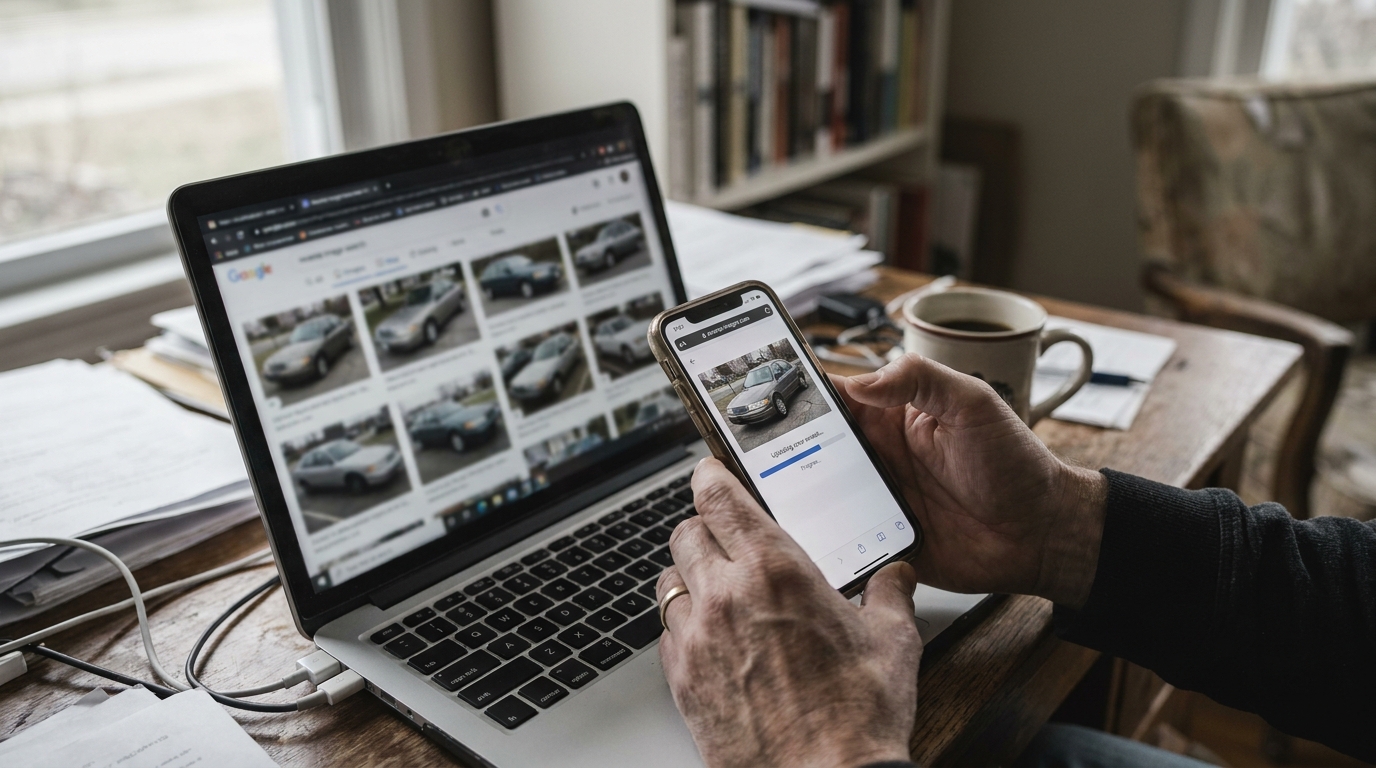
Selling a car online means your photos are doing the talking before you ever exchange a message with a potential buyer. What many sellers don't realise is that those photos aren't just being looked at, they're being investigated.
Buyers have become remarkably savvy about protecting themselves from scams. A quick right-click, "Search image with Google," and within seconds they can see everywhere else that photo has appeared online. For honest sellers, this might seem irrelevant. But understanding what buyers are looking for when they reverse image search your car listing changes how you should think about every photo you take.
The good news: if you're selling a real car with real photos, this scrutiny works in your favour. The trick is making sure your images communicate authenticity, not accidentally trigger the same red flags that scammers do.
Why Buyers Have Learned to Verify Car Listings
Online car scams are depressingly common. The pattern is usually the same: attractive car, price slightly too good, seller who's "overseas" or "can't meet in person," and photos that look just a bit too polished. Buyers who've been burned once, or who've heard enough horror stories, now treat verification as a standard step.
Google Images, TinEye, and Yandex make reverse image searching trivially easy. Upload a photo or paste a URL, and you'll see every indexed instance of that image online. This takes about fifteen seconds and costs nothing.
Buyers aren't necessarily suspicious of you specifically. They're running these searches on multiple listings as a basic filtering step. Your photos will be checked alongside every other car they're considering. The question is whether your images pass the test or raise questions that never get asked out loud, the buyer simply moves on.
What Red Flags Trigger Buyer Suspicion
When someone reverse image searches your listing, they're looking for specific warning signs:
Stock photos or manufacturer images. Professional press photos from car launches, generic dealership shots, or images that appear on multiple unrelated listings are immediate disqualifications. These suggest the seller doesn't actually have the car, or is hiding something about its real condition.
The same photos on old listings. If your images appeared six months ago on a different platform at a different price, buyers assume either the car didn't sell for a reason, or the listing is being recycled fraudulently.
Identical backgrounds across different cars. Some scammers use the same studio backdrop or digitally insert cars into fake showroom settings. When buyers see the exact same background on multiple vehicles from different "sellers," they know something's wrong.
Inconsistent metadata or quality. A mix of high-resolution studio shots and blurry phone photos in the same listing suggests images have been collected from different sources rather than taken by the actual owner.
Overly perfect everything. Ironically, photos that look too professional can raise suspicions, especially if the price or seller communication doesn't match the polish level.
How Original Photos Build Trust
The flip side of all this scrutiny is that authentic photos create trust signals that scammers can't easily fake.
When a buyer reverse image searches your listing and finds nothing, just your photos appearing nowhere else online, that's actually a positive signal. It suggests you took these photos yourself, of this specific car, for this listing.
Photos that clearly show your actual location help too. A driveway, a street, a local park, these mundane backgrounds communicate authenticity. The visible imperfections of real life (a garden hose in the background, a neighbour's fence, slightly inconsistent lighting) paradoxically make your listing more trustworthy.
This doesn't mean your photos need to look amateur. Clean, well-lit, properly composed images taken in your actual environment strike the right balance between professional and authentic.
When Edited Photos Look Suspicious
Photo editing tools have become remarkably powerful, and some sellers are tempted to use them aggressively. This can backfire.
Heavily processed backgrounds, obviously fake studio settings, or images that look like the car was digitally placed into a scene all trigger the same suspicion as stock photos. Buyers can't always articulate why an image looks off, but they sense it. And when something feels wrong, they move on.
There's a meaningful difference between cleaning up a photo and fabricating one. Removing distracting background clutter or ensuring consistent lighting across your images is reasonable, this is what Cardabra does, replacing messy backgrounds while keeping the car exactly as it is. But adding fake showroom floors, impossible reflections, or backgrounds that look like they came from a luxury car commercial creates the exact uncanny valley effect that makes buyers suspicious.
The goal should be presenting your car clearly, not making it look like something from a magazine. The car itself, honestly photographed, is what sells.
Simple Ways to Prove Your Photos Are Authentic
If you want your listing to hold up to scrutiny, and actively communicate trustworthiness, a few practical steps help:
Include detail shots that only an owner would take. The odometer reading, the VIN plate, the service sticker, specific wear patterns on the steering wheel, these are hard to fake and easy to verify.
Show the car in context. One or two photos that include your environment (without revealing your exact address) demonstrate you actually have the vehicle. A photo in your garage or on your street says more than a dozen studio shots.
Keep your backgrounds consistent and realistic. Whether you're using a clean background or your actual driveway, consistency across all images in the listing suggests one source, you.
Don't over-edit. If you're cleaning up backgrounds, stick to tools that remove distractions rather than fabricate settings. The car should look like itself, not a CGI render.
Be ready to take more photos. Serious buyers often request specific angles or details. Responding quickly with exactly what they ask for is the strongest possible proof that you have the car and have nothing to hide.
Scrutiny Is Your Ally
It's easy to feel defensive about buyers who verify your listing. But their caution actually protects you too, it weeds out the scammers you're competing against and rewards honest sellers with genuine interest.
Every check that your photos pass is a reason for buyers to trust you more. Every authentic detail is a signal that sets you apart from the noise. When your listing survives a reverse image search and comes up clean, you've already cleared a hurdle that plenty of fake listings can't.
The work of taking real photos of your real car, presenting them honestly, and being responsive to questions isn't glamorous. But it's exactly what separates successful listings from the ones that buyers scroll past without a second thought.
For the photo set that earns that trust in the first place, see Photos to Sell Car Online: What Buyers Need to See. And if you edit your photos before listing, Car Photo Editing That Keeps the Dents explains the standard that survives a suspicious buyer's checks. And if you are still choosing a tool, the CarPixAI alternative comparison for Australian sellers sets out which ones respect that line.
Turn your phone snaps into showroom-grade listings.
Upload a photo, pick a background, and Cardabra returns a polished listing image in about 30 seconds.