

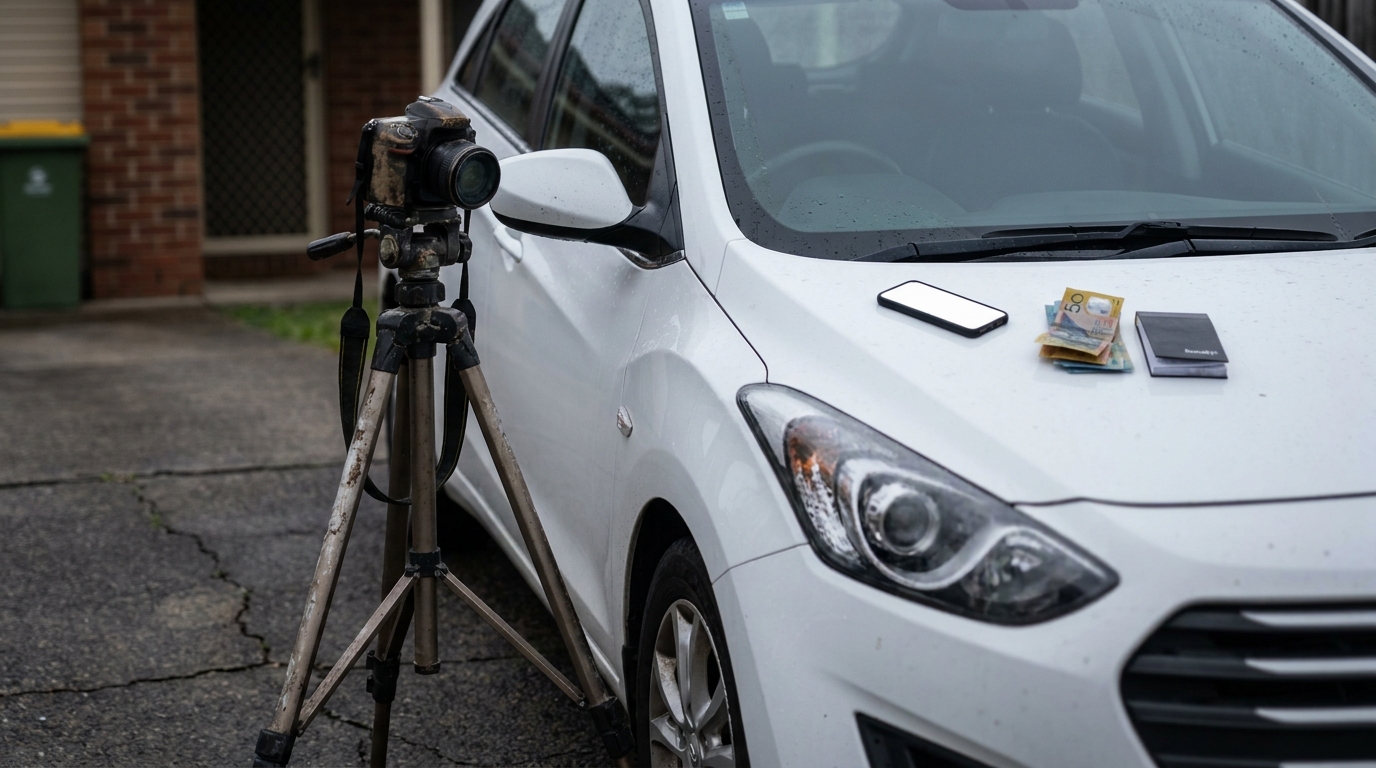
Car photo editing in Australia costs somewhere between two dollars and twenty dollars a photo depending on how you do it, and a professional photographer costs between $100 and $400 a session before any retouching. For most private sellers and independent dealers, shooting on a phone and running the photos through an AI editor is the cheapest path to listing photos that look professional, and it is not close. The photographer wins in a narrower set of cases, which we cover further down.
Here is the full breakdown in Australian dollars, with the numbers that actually drive the decision.
The four ways to get listing photos, priced
There are four realistic options for a car being sold in Australia in 2026, and each has a different cost structure.
The first is doing nothing. Phone photos straight to Carsales or Facebook Marketplace. The cash cost is zero. The real cost is slower sales and lower offers, and we will come back to how big that gap is.
The second is a professional automotive photographer. In Brisbane, Sydney, Melbourne and Perth, a single private car shoot typically runs $100 to $250. Dealer packages that cover several vehicles in one visit are usually quoted per car at $30 to $80, with a minimum call out around $150 to $400. Basic colour correction is normally included. Background replacement, plate blurring and consistent showroom looks are usually extra, or not offered at all.
The third is manual editing, either yourself in Photoshop or Lightroom, or outsourced. Offshore editing services charge roughly $2 to $8 per image for a background swap and cleanup, with turnaround measured in hours or a day. If you do it yourself, the software costs about $15 to $35 a month and each clean background replacement takes twenty to forty minutes once you know what you are doing. Our comparison of AI vs Photoshop for car backgrounds goes into the quality trade offs.
The fourth is an AI car photo editor. You photograph the car on your phone and the software does the segmentation, background replacement, relighting and plate blur in well under a minute. Cardabra's pricing is a useful reference point: consumer packs start at $19 for 25 credits, a background replacement uses 3 credits, so a private seller pays roughly two dollars a photo, less on larger packs. Dealer plans start at $99 a month for 200 credits. New accounts get 6 free credits to test with.
What a full listing actually costs under each option
A good used car listing needs around 15 to 20 photos. Not all of them need editing. The exterior hero shots, the front and rear three quarter angles and the side profiles are the ones that benefit from a clean background. Interior, odometer, tyre and damage close ups should be left as honest phone photos. Call it 6 to 8 edited exteriors per car.
For a private seller, that is roughly $12 to $16 through an AI editor, $15 to $60 through an offshore editing service, and $100 to $250 through a photographer who may or may not deliver the clean background look. Doing it yourself in Photoshop is three to five hours of your weekend.
For an independent dealer turning over 20 cars a month, the same maths gives about $300 to $400 a month through an AI editor on a dealer plan, $600 to $1,300 through outsourced editing, and $1,000 to $2,500 a month for a photographer on retainer, plus the scheduling problem of getting the photographer and the fresh stock in the same place at the same time. The used car photo workflow for independent dealers shows how the AI option fits into a normal week without anyone's job changing.
What you are paying for in each case
The photographer's fee buys three things: a trained eye for angle and light, proper equipment, and time on site. That is real value. What it does not buy is a consistent showroom background across the whole yard, quick turnaround on new stock, or any editing beyond basic correction unless you pay for it.
Manual editing buys precision. A skilled retoucher can do things no algorithm will, like matching a specific brand style. It costs time or money per image and quality varies with the person doing it.
An AI editor buys a sophisticated image processing pipeline packaged so that a salesperson or a private seller can use it in about the time it takes to send a text. The algorithm is doing the hard work: separating the car from a busy driveway, building a believable scene behind it, matching shadows and reflections so the car sits in that scene. What you should not be paying for, and should actively avoid, is any tool that also retouches the car. Removing dents and scratches from listing photos is where Australian Consumer Law problems start, and it is where buyers lose trust at inspection. We set out the boundary in Car Photo Editing That Keeps the Dents.
The cost of doing nothing
The zero dollar option is not free. Carsales' own advice, and every dealer's experience, is that listings with more and better photos get more enquiry. On Facebook Marketplace and Gumtree, the first photo decides whether the listing gets opened at all. A cluttered driveway shot competes badly against a clean one at thumbnail size, and buyers form an opinion about the seller before they read a word.
The practical effect is longer time on market and softer offers. For a private seller, a car that sits three extra weeks is three more weeks of rego, insurance and answering messages. For a dealer, days on lot is money. Even a small lift in enquiry pays for two dollar photo edits many times over, and it usually pays for a photographer too. The question is which one gives you the lift for the least cost and hassle.
When a photographer is worth it
There are cases where the photographer is the right call, and pretending otherwise would be dishonest.
Prestige and enthusiast cars, where the buyer expects magazine quality and the margin supports it. A Porsche or a restored classic deserves the trained eye, and the photographer's fee is a rounding error on the sale.
Brand campaigns and dealership marketing, where you need shots of the site, the team and the stock together in a controlled style. That is not a listing photo job.
Cars where the setting is part of the pitch, such as a four wheel drive shot on a beach or a station wagon on a country property. An editor can place a car in an outdoor scene, but a real location shot with the real car carries a different weight.
For everything else, meaning the daily volume of Corollas, Rangers, i30s and Mazda 3s that make up most of the Australian used market, a phone and a good editor produce photos that are visually on par for listing purposes at a fraction of the cost.
How to spend the least and still look professional
Shoot properly first. The editor cannot fix a bad angle, a dirty car or harsh midday shadows across the bonnet. Our guide to photographing a car for sale with just your phone covers timing, angles and the shot list, and it costs nothing to follow.
Edit only the exteriors that benefit. Leave the interior, odometer and damage shots honest and unedited. That keeps your cost per listing down and, more importantly, keeps the listing truthful.
Keep every edited photo in the same background. Consistency reads as professional. Mixing a studio floor with a beach scene reads as assembled.
Blur the number plate if you are a private seller. Most AI editors do this automatically, and it removes one privacy exposure at no extra cost.
Test before you pay. Free credits exist for a reason. Run your own photos through the tool, check the edges around the wheels and mirrors at full size, and confirm that any scratch in the original is still there in the output.
The recommendation
For a private seller, use your phone, follow the shot list, and put six to eight exteriors through an AI editor for around $15. For an independent dealer, put the whole yard through a dealer plan for a few hundred dollars a month and get consistent Carsales photos on the day the car arrives. Bring in a photographer for the prestige stock and the marketing shoots. That is where each dollar does the most work.
Turn your phone snaps into showroom-grade listings.
Upload a photo, pick a background, and Cardabra returns a polished listing image in about 30 seconds.